This article is a step-by-step guide for navigating BusinessObjects Reports using the "Schedule" method. BusinessObjects is available to HMIS users who also have a BusinessObjects license. To determine if you have access, check to see if you have "Connect to BusinessObjects" in the upper right hand corner of your dashboard screen - just below the Back Date Mode. All HMIS Agency Admins should have access!
The "Schedule" function of BusinessObjects is useful when running any type of report, but especially for large reports, when needing to run multiple reports at the same time, or when you plan to navigate away from the system for any reason. Input Controls cannot be used when scheduling reports!
Schedule Report is the NCCEH suggested method as it is easier for the Data Center to assist if there are questions.
Accessing a report
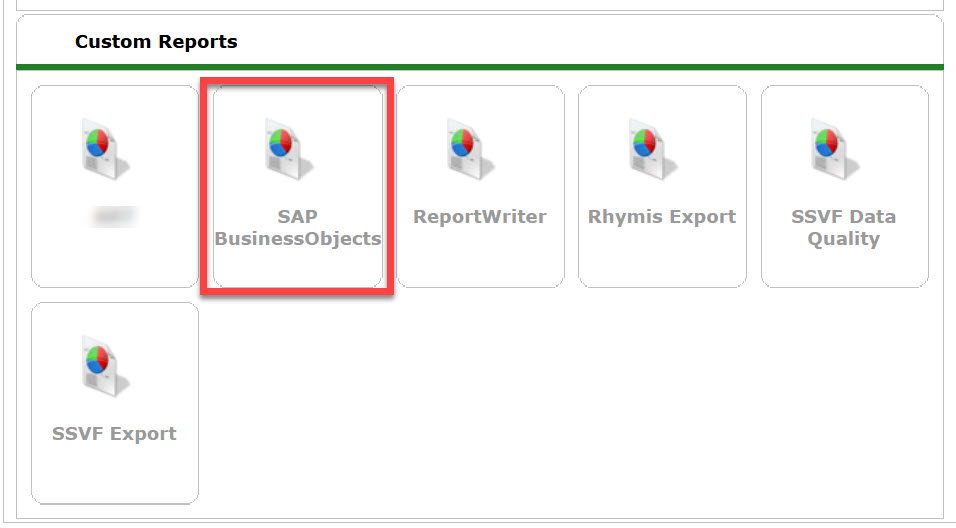
- BusinessObjects can be accessed two ways: (1) clicking on Connect to BusinessObjects located in the upper right-hand corner of the screen (below "Back Date Mode") or (2) by clicking the Reports tab from the main menu (on left-hand side of the screen) and then click on the BusinessObjects button
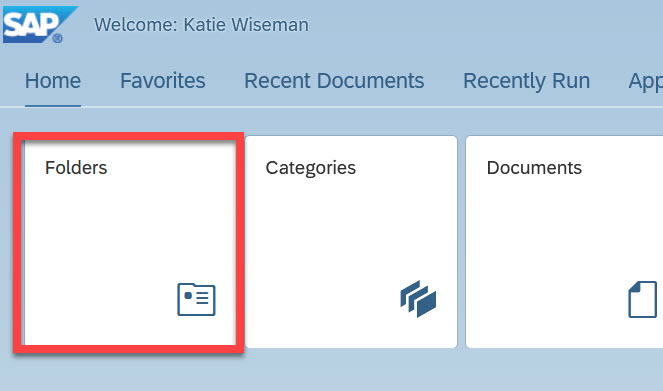
- Click the Folders button to navigate to a list of available reports
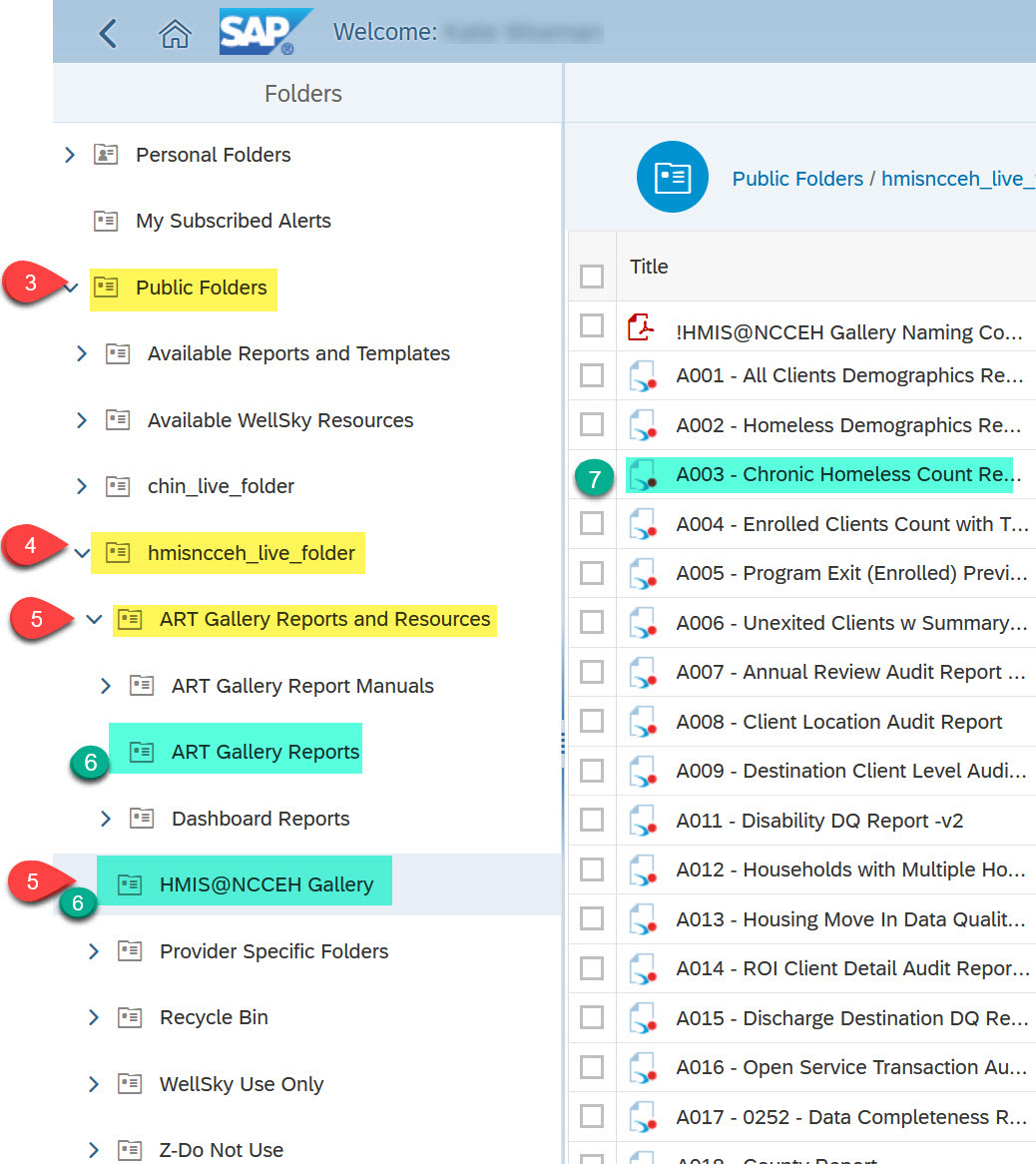
- Click Public Folders
- Click hmisncceh_live_folder
- Click ART Gallery Reports and Resources (for WellSky created reports, which all start with numbers - ex,. 0212, 0640, 0700) or HMIS@NCCEH Gallery (for NCCEH created reports, which all start with letters - ex. A007, D003)
- Click on ART Gallery Reports or HMIS@NCCEH Gallery to open the folder. All the reports will appear in a column to the right.
- Locate the row with the name the specific report needed
- Click the three dot icon ( ... ) from the column on the far right of the screen
- Select Schedule

Scheduling the selected report
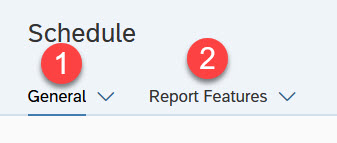
Once the desired report has had "schedule" selected, the screen will refresh and populate the scheduler screen with two tabs that need to be completed: General (for the instance details such as name, save location, and frequency) and Report Features (for format and reporting prompts)
General Tab: Instance Details
- Title - This is the name of the report pulled, and it is editable. It is recommended that the title be changed to something recognizable. (Suggested naming convention: Report Number - Project Name - Run Date - such as "A013 - ABC Emergency Shelter - 4.18.2022"
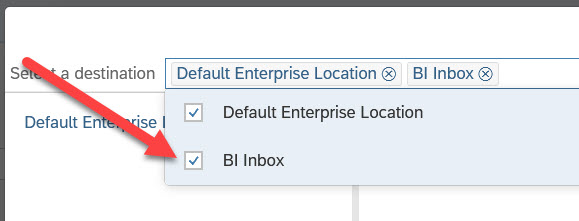
- Delivery Destinations - This field allows for the report to be sent to the user's person BI Inbox within BusinessObjects to more easily locate and manage past reports. To update the destination:
- Click Add
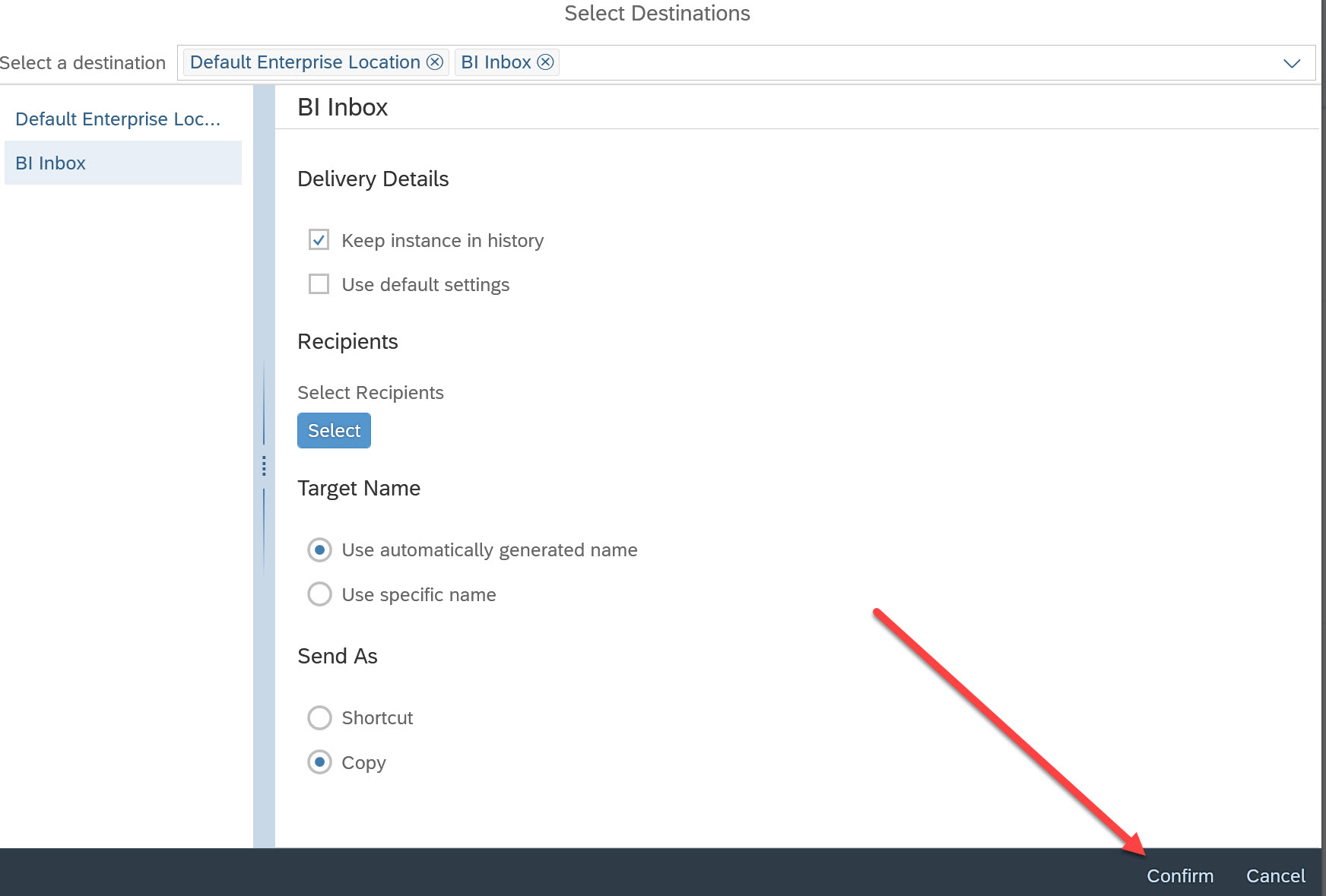
- In the popup that appears, check the box next to BI Inbox
- DO NOT ADJUST ANY OTHER SETTINGS/SELECTIONS!
- Click Confirm
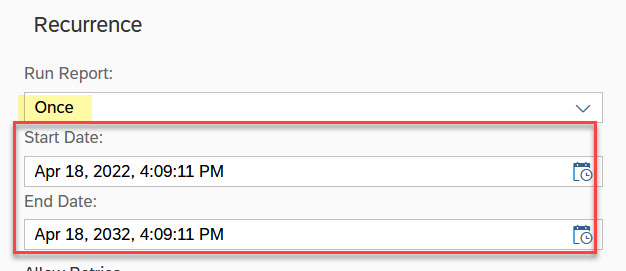
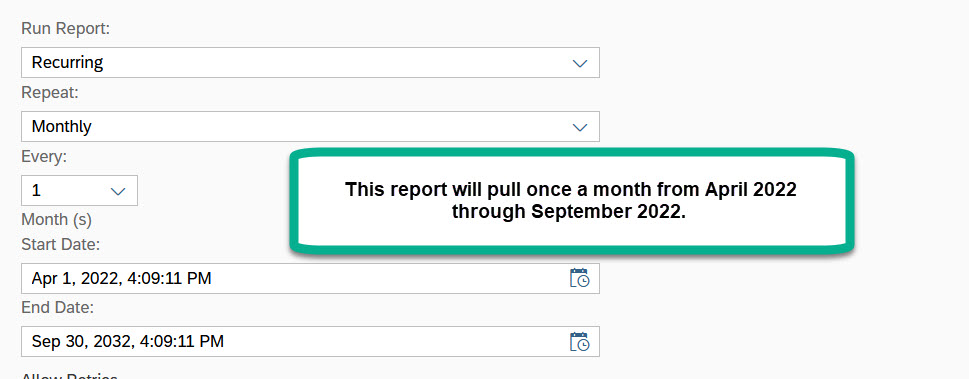
- Recurrence ("Report Run") - This drop down field determines when and how frequently the report will run. Report Run has four options for report run frequency:
- "Now" - the report will run immediately
- "Once" - the report will run on the date selected.
- "Recurring" - the report will run multiple times, depending on the frequency in the subsequent fields. Note: If selected, keep in mind that while the report will run on the schedule indicated, but the date ranges selected in the prompts will not change!
- "Calendar" - DO NOT USE - THIS FEATURE IS NON-FUNCTIONAL
Report Features: selecting format and prompts
Click on the Report Features to open the next screen for selecting the report format and the reporting prompt parameters.
- Formats - Select of the desired format of the report. The general recommendation is to select "Microsoft Excel - Reports" or "Adobe Acrobat (pdf). NOTE: if Web Intelligence is selected, the report will not be viewable in the BI Inbox! Do not select Microsoft Excel - data!
- Prompts - This table confirms the prompts that will be used within the report run
- To edit the prompts, click Edit Prompts Values. This could take several seconds to a few minutes to load!
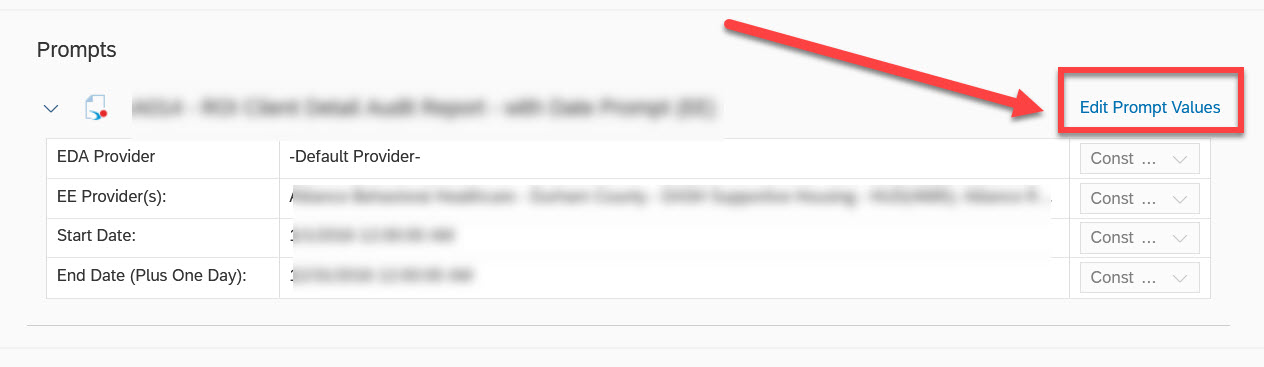
The report prompts are loaded when a prompt pop-up box appears. Once the Prompts are edited, click Apply to confirm the prompt changes.

Editing Prompts
Prompts are the parameters set by you for which the database should pull and report out the data. Prompts that need to be completed will vary by report. In general, here are a few tips about prompts that apply to most report.
Mandatory Prompts
Most prompts in BusinessObjects reports are required, but there are some circumstances where you may see an optional prompt. If a prompt is required, the prompt will appear with * in front of the name:
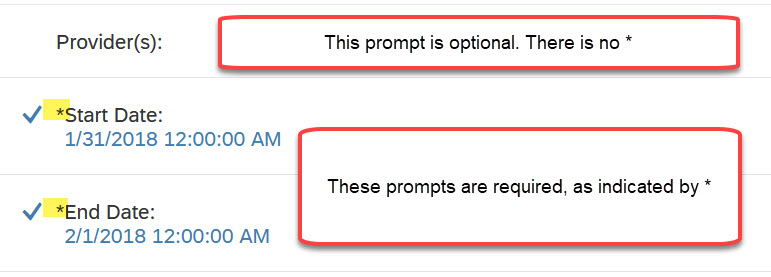
If you only want to see the required prompts, click the Mandatory button in the lower left corner of the pop-up box. This will reduce the prompts on the screen to only those necessary to run the report.

Selecting Dates
All BusinessObjects reports that utilize a date range will have the date range separated out onto two separate lines. One line will request the start date for the reporting range, the other will ask for the end date. The terminology for the date prompts varies, and some common examples include, but are not limited to: "Enter Start Date", "Report Start Date", "Select Start Date", "Enter End Date PLUS 1 Day", Report End Date (Plus One)", and "Select End Date Plus One Day".
-
- If a date prompt is present, click the prompt, click on the Calendar Icon to select the date, and click OK. You can also enter the date manually in the text bar at the top.
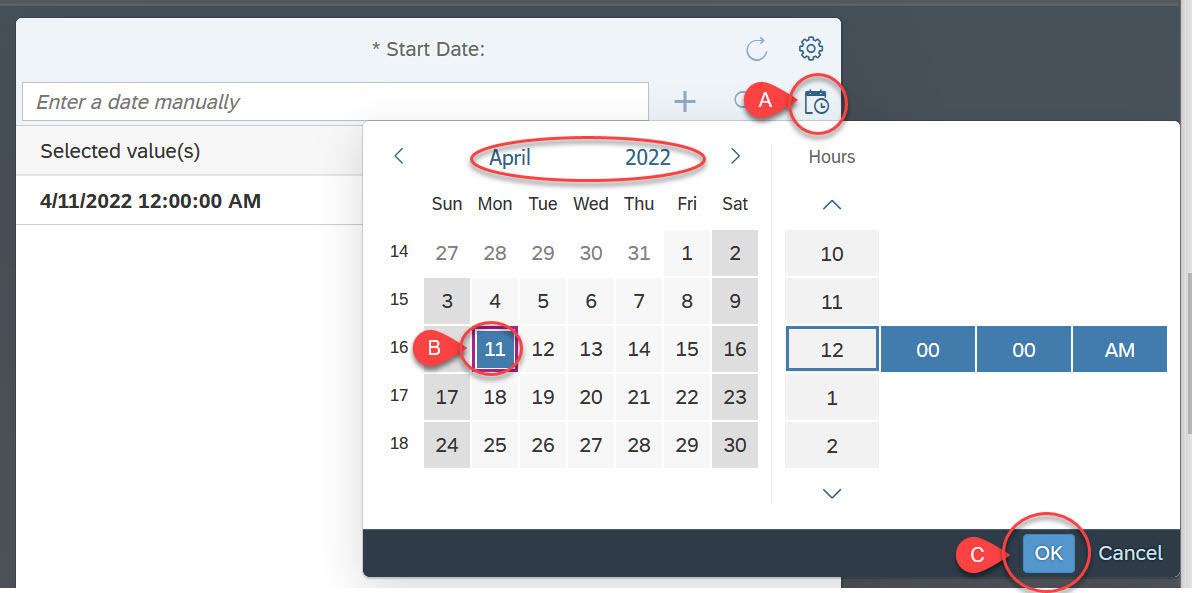
Start Date
The report start date should be the first day of the reporting period. The date must include the month, day, and year. Example: If the start of your reporting period is October 1, 2021, you should enter "10/01/2021" or "10/1/21".
End Date
End When entering an end date for the report, you must select or enter the day after the reporting period ends. Example: If the end of your reporting period is June 30, 2021, you should enter "07/01/2021" or "7/1/21".
Effective Date
Many BusinessObjects reports have a prompt that says "Enter effective date." If the report utilizes a start and end date, then the effective date you should enter will almost always match the same date you entered into the end date prompt. If, however, the report does not have a date range, the effective date will typically be the date you are running the report.
Selecting Providers, Reporting Groups, or CoCs
Most BusinessObjects reports will require the selection of one or more providers to run. In limited circumstances, the report may also allow for Continuum of Care or Reporting Groups to be selected. The wording of the prompt to select the providers for the report varies. Some common examples include: "EDA Provider", "Provider(s)", "Provider Group(s)", etc.
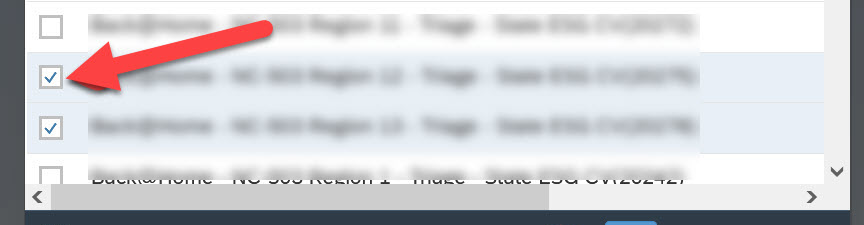
- For these types of prompts, click on the prompt row, and click the refresh button. This will create a full list of available options from which to select.
- Select the desired value(s) by clicking the checkbox(es) to the far left.
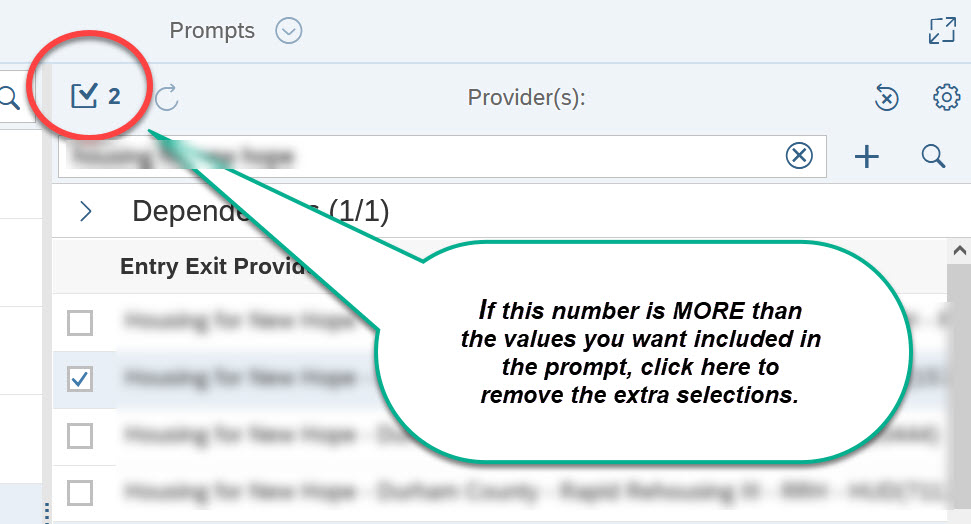
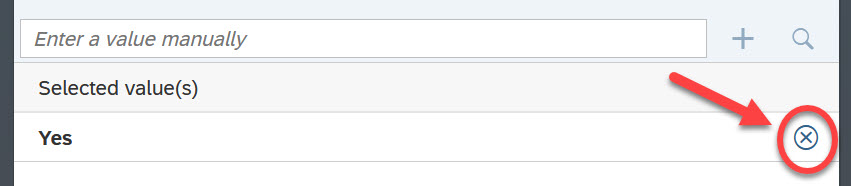
- Confirm that the number appearing on the square icon, in the top left of the pop-up box, matches the number of desired value(s) selected. If the number is greater than the number of desired value(s), there are pre-populated selections that need to be removed. To remove those extra selections:
-
- Click on the square icon
- Click the X next to the selected prompt which should be excluded from the report
- Once all pre-populated selections have been removed, click OK
- Click on the square icon
-

EDA provider prompt tip: keep the EDA provider to "Default" if running the report for multiple providers, as a reporting groups, or as a CoC. If the report is for only one provider/project, select the EDA provider to match the Provider prompt.
Once the "General" and the "Report Features" tabs have been completed, click Schedule in the bottom right corner for the report to be scheduled. The page will be redirected to the "Instance Folder" where all pending and running reports will be listed. Confirm the title of the report just scheduled is on the list. Either wait here until the report is successfully completed or navigate away from this view to return later.
Accessing Completed Scheduled Reports
From the BI Launch Pad (main dashboard), scheduled reports can be accessed from either the BI Inbox or Instances Folders.

BI Inbox
The BI Inbox holds reports for which have been scheduled to drop into this specific folder. Reports can be stored up to one year within the folder. When the BI Inbox has been clicked, the screen will refresh to show a menu of past scheduled reports which were directed to the BI Inbox.
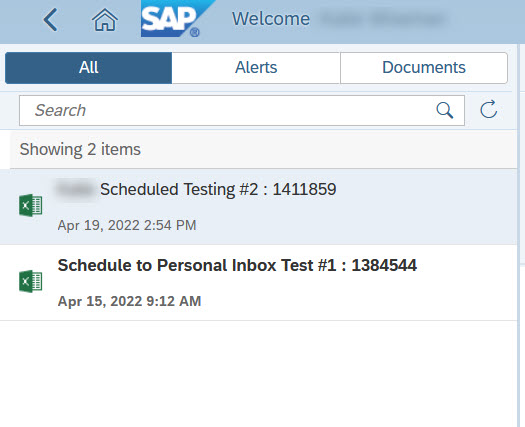
Once a scheduled report has been selected from the menu on the left of the screen, additional details about the report will appear on the right side of the screen.

Downloading Scheduled Report from BI Inbox
- Select the scheduled report needing to be downloaded from the menu on the left
- Click View
- Open the report from your computer's download folder

Instances
The Instances folder stores all scheduled reports up to 60 days.
When the Instances folder has been clicked, the screen will refresh to show a table of past scheduled reports. Each row displays details of one specific report, including title, format type, report run status (i.e. running or successfully completed), time report was pulled, who pulled the report, and additional options (displayed by the three dots).

*for a larger image, click on the attachment "SAP - instances folder.jpg" at the bottom of the article*
The tool bar at the top of the Instances window allows for the table of reports to be filtered.

A. Instance Time: This field narrows or expands the date range of results based on when a report was run. The date is displayed as DAY - MONTH - YEAR. (ex: If the results need to be narrowed to the reports run the first week in March, the instance time would be 01.05.2022-07.05.2022)
B. Status: This field narrows or expands results based on the report run status, such as pending, running, failed, successfully completed, etc.
C. Type: This field narrows or expands results based on the report format, such as Excel, PDF, etc.
D. Title: This field allows for the result to be narrowed to a specific report(s) based on the Title of the report.
Downloading Scheduled Report from Instances
- Locate the scheduled report needing to be downloaded from the Instances table
- Click the three dots ( ... ) located to the far right side of the row
- Click View
- Open the report from your computer's download folder
REMINDER: When downloading or printing reports containing Personally Identifying Information (PII), extra security precautions should be taken. Be sure to delete downloaded files from your computer when they are no longer needed. Be sure to remove PII (names, date of birth, etc) before emailing or sharing the report with others!
ARE YOU LOOKING FOR MORE RESOURCES? BELOW ARE SOME SUGGESTED RELATED ARTICLES!
How to View BusinessObjects Reports
BusinessObjects Known System and User Errors
Comments